Tower Rescue Technician Course

SPRING 2026 registration is CLOSED. For questions regarding the course, please contact Captain Zach Absolon at zabsolon@mehlvillefire.com or call 314-565-1716.
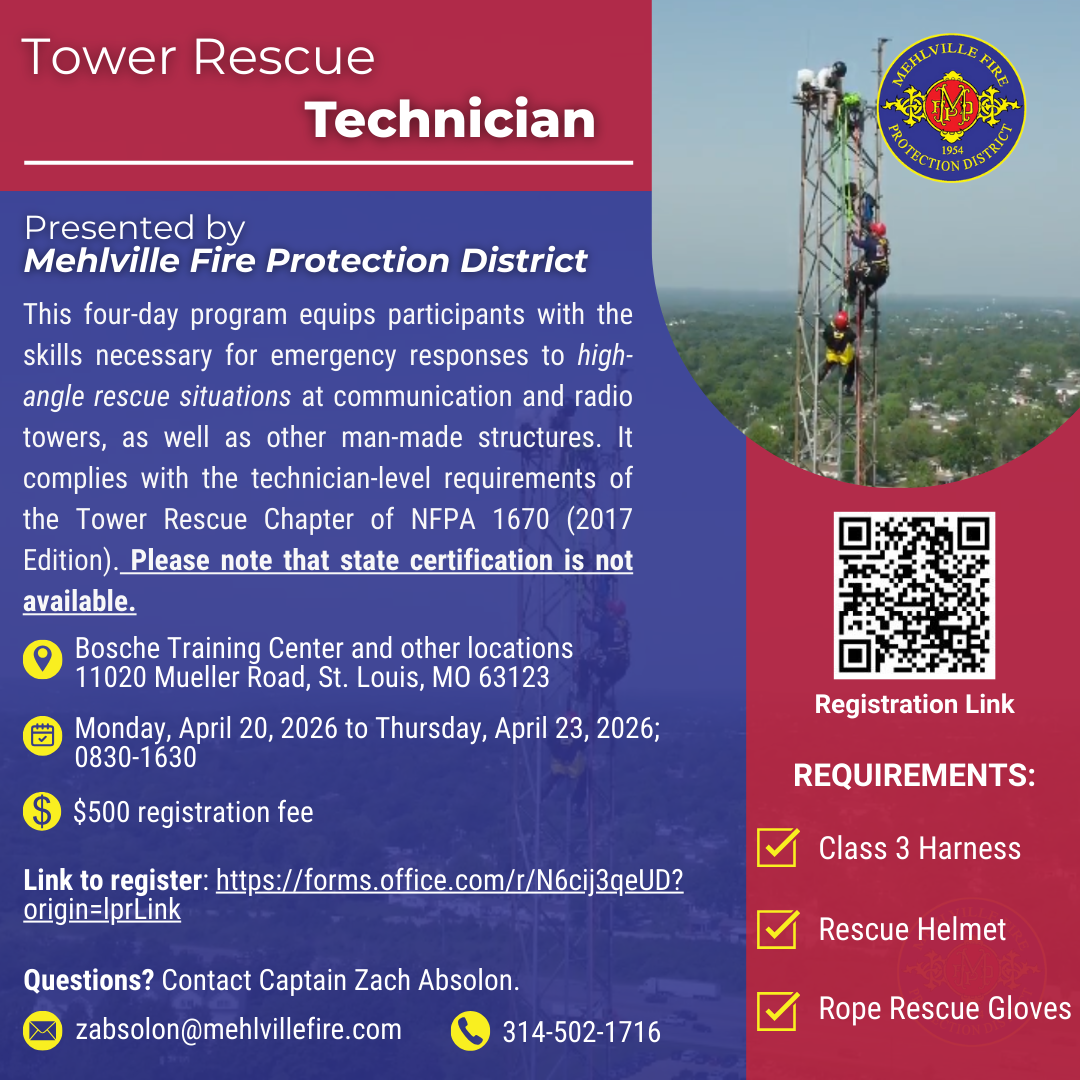
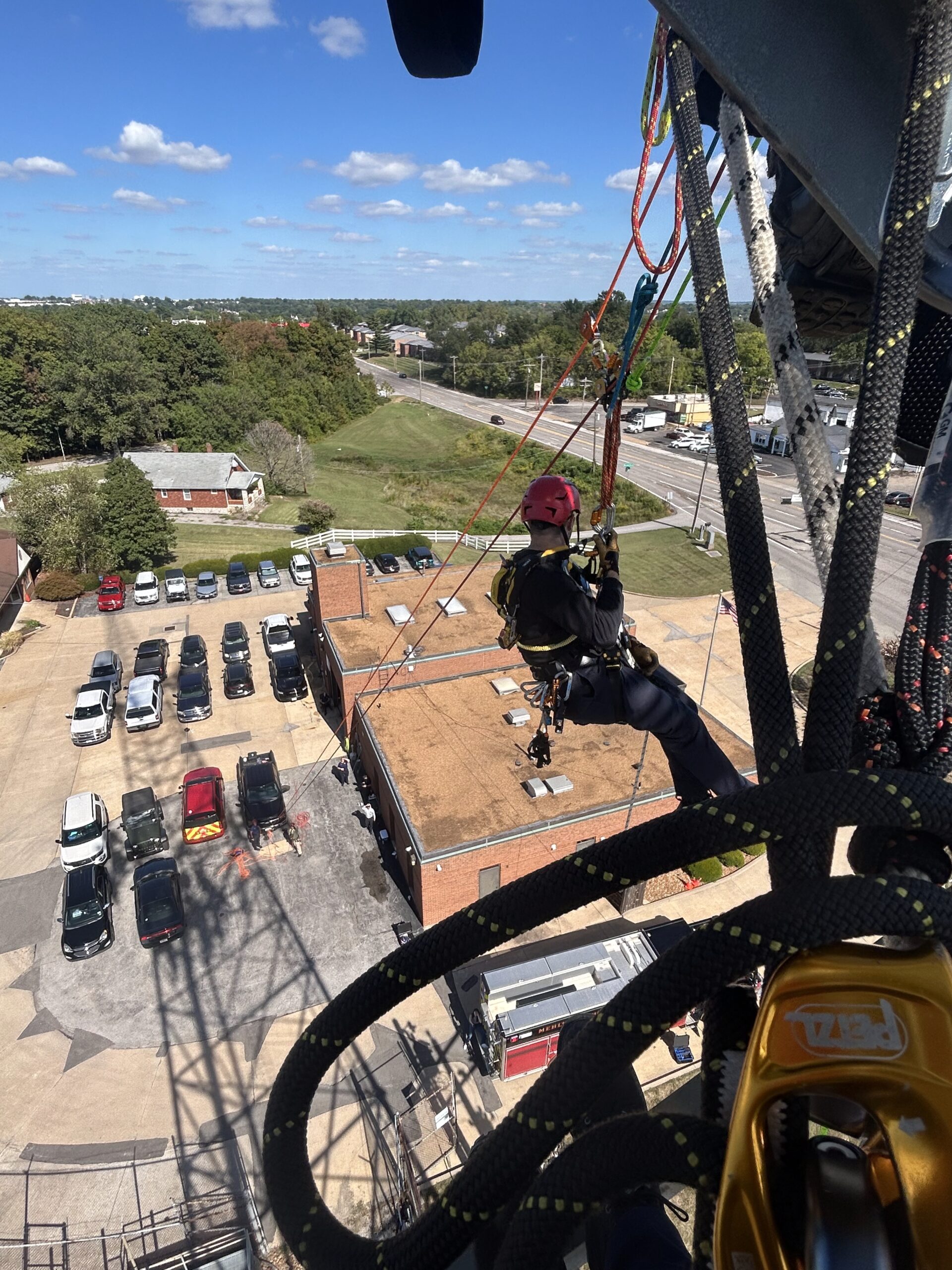
The Tower Rescue Technician course prepares emergency responders to safely and effectively manage high-angle rescue incidents on communication and radio towers, as well as other tall man-made structures.
Built around the technician-level requirements in the Tower Rescue chapter of NFPA 1670 (now incorporated into NFPA 2500), this program focuses on giving rescuers the knowledge, skills, and confidence needed to operate in one of the most challenging rescue environments.
All instruction is delivered by Mehlville Fire Protection District personnel who are experienced and certified Tower Rescue Technicians, bringing real-world incident experience and a strong safety culture to every evolution.
Why Tower Rescue Training Matters
Broadcast, cellular, and communication towers are now common in almost every community. When an incident occurs at height—whether involving a tower worker, contractor, or member of the public—local responders must be ready to operate in an environment that can include:
Extreme heights and exposure
Complex fall-protection systems
Electrical and RF (radio frequency) hazards
Confined or obstructed work platforms and ladders
High winds and rapidly changing weather
These factors make tower incidents fundamentally different from standard rope or structural rescues. A dedicated tower rescue program ensures responders understand the unique hazards, equipment, and rescue strategies required to bring patients down quickly and safely while protecting the rescue team.
What You’ll Learn
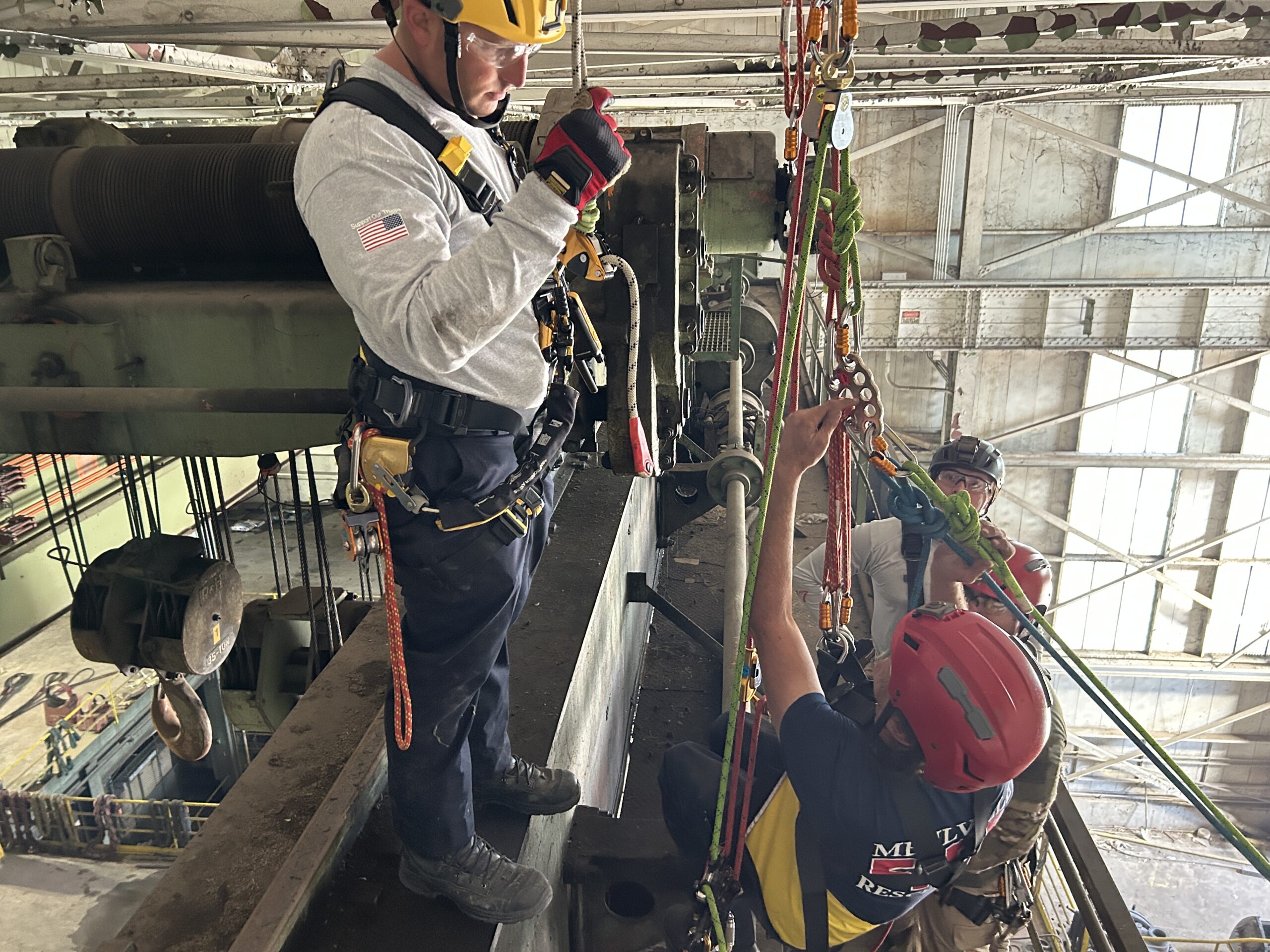
Participants progress from foundational concepts to advanced technician-level skills through a blend of classroom instruction and intensive hands-on tower evolutions. Core topics include:
1. Tower Hazards and Safety
- Types and construction of communication and radio towers
- Site assessment, hazard recognition, and pre-incident planning
- RF and microwave radiation awareness and monitoring
- Electrical and weather-related hazards (lightning, wind, ice)
- Scene control, exclusion zones, and tower shutdown coordination
2. Fall Protection & Climbing Systems
- Fall-protection principles and standards
- 100% tie-off and safe climbing techniques
- Fixed ladder systems, vertical lifelines, and cable safety systems
- Work positioning and personal fall-arrest systems
- Equipment inspection, care, and documentation
3. Rope & Rigging for Towers
- Anchor selection and engineered anchor use on towers
- Edge protection and rope routing in lattice and monopole structures
- Raising and lowering systems for vertical and off-set rescues
- Use of pre-engineered and component rescue systems
- Litter management and patient movement in the tower environment
4. Rescue Techniques & Scenarios
- Accessing a subject on ladders, platforms, or tower members
- Pick-off rescues of harnessed and non-harnessed victims
- Rescues requiring small deviations from vertical and tag-line control
- Self-rescue and partner-rescue techniques for stranded climbers
- Patient packaging, medical considerations, and rapid evacuation from height
5. Team Operations & Decision-Making
- Incident command and communication in tower environments
- Role assignments, team size, and redundancy for safe operations
- Balancing speed of rescue with rescuer safety
- Integration with tower owners, contractors, and utility partners
- Post-incident review and ongoing training recommendations
Benefits to Your Agency
Graduates of the Tower Rescue Technician course will help your organization:
- Expand its technical rescue capability to include tower and high-angle incidents
- Reduce risk to both responders and tower workers through better planning and safer tactics
- Improve interoperability with neighboring agencies and private tower owners
- Demonstrate alignment with national consensus standards for technical rescue operations